
The Mediterranean nation has experienced explosive growth in holiday let listings, with active properties surging 70% from 122,000 in 2024 to 207,572 by the end of 2025 according to ELSTAT data—marking a dramatic acceleration from the previous 9% annual growth rate.
Once a niche market, the sector has rapidly matured into a key player in real estate investment and income generation. From Athens’ inner districts to Cycladic islands, furnished apartments and holiday villas are being repurposed to meet growing demand from international travellers. While platforms like Airbnb have boosted local economies, critics argue they’ve exacerbated affordability challenges, prompting regulatory reforms to balance tourism and community needs.
This transformation has not only diversified the real estate market but also introduced new compliance and regulatory considerations for property owners and investors.
| NUTS 2 Region | Number of Registered Properties |
|---|---|
| Attiki (Attica - Athens Region) | 59,793 |
| Notio Aigaio (South Aegean) | 29,568 |
| Kentriki Makedonia (Central Macedonia) | 26,280 |
| Kriti (Crete) | 22,120 |
| Ionia Nissia (Ionian Islands) | 19,256 |
| Peloponnissos (Peloponnese) | 14,344 |
| Anatoliki Makedonia & Thraki (Eastern Macedonia & Thrace) | 8,611 |
| Thessalia (Thessaly) | 8,441 |
| Sterea Ellada (Central Greece) | 5,676 |
| Voreio Aigaio (North Aegean) | 4,575 |
| Dytiki Ellada (Western Greece) | 4,439 |
| Ipiros (Epirus) | 3,872 |
| Dytiki Makedonia (Western Macedonia) | 597 |
| Total | 207,572 |
Key Takeaways:
Mandatory Registration: Register properties with AADE to get a PRN for listings—fines up to €5,000 if not.
90-Day Rental Cap: Max 90 days/year (60 on small islands)—unless income stays under €12,000.
Rising Taxes/Fees: Pay progressive income tax (15%-45%) + new nightly fees up to €15 by 2025.
Oct 2025 Deadline: Stricter rules start—safety upgrades required, platforms remove non-compliant listings.
Registering a Property for Holiday Lets
To legally rent out a property for stays of fewer than 30 days, owners must register on the Independent Authority for Public Revenue’s (AADE) Short-Term Lease Register. This is done online through the “myAADE” digital platform using a Greek tax identification number (AFM). The process involves submitting the property details, uploading the Energy Performance Certificate, and obtaining a Property Registration Number (PRN), which must be displayed on every online listing. If managed by a third party, a signed management agreement must also be uploaded. Without this registration, property owners risk fines and deactivation of listings. Non-commercial hosts (1–2 properties) pay a nominal booking fee, while commercial operators (3+ properties) must register as businesses, incurring VAT and hotel-level taxes. Failure to register or publish this ID can lead to fines up to €5,000 per listing.
Key Restrictions on Holiday Lets
Current limitations include a maximum rental period of 90 days per calendar year per property—or 60 days for islands with populations under 10,000—unless total annual income does not exceed €12,000, additionally, stays exceeding 30 days must be classified as long-term leases. Properties in restricted zones, such as central Athens, face a one-year registration freeze starting January 2025. Athens neighbourhoods like Kolonaki and Exarchia have halted new registrations until 2026, with violators facing €20,000 fines. Properties must not offer hotel-like services such as breakfast, daily cleaning, or reception unless appropriately licensed. Multi-unit listings in apartment buildings may be subject to local limitations or co-ownership objections, particularly in densely populated neighbourhoods. Basements and semi-basements without adequate natural light are banned, while industrial spaces may qualify if safety standards are met.
| Municipal District | Restricted Neighborhoods | Characteristics |
|---|---|---|
| 1st District | Plaka, Kolonaki, Syntagma, Omonia, Monastiraki, Koukaki | Historic center, highest tourism density |
| 2nd District | Exarchia, Pangrati (Pagkrati) | Residential areas, university proximity |
| 3rd District | Mets, Neos Kosmos, Agios Artemios | Mixed residential-commercial zones |
| Policy Objective: Address housing shortages and preserve residential character in areas experiencing tourism saturation | ||
Taxation of Rental Income
Rental earnings are taxed progressively, with rates ranging from 15% to 45%, plus a solidarity surcharge of up to 10% based on total income. The current rates are 15% for income up to €12,000, 35% for the next bracket up to €35,000, and 45% beyond that. For example, €40,000 in combined employment and rental income could incur €9,950 in taxes. From April 2025, nightly accommodation fees rise from €1.50 to €8 during peak season, and properties over 80 sq. m face rates up to €15 per night. These rates apply regardless of the owner’s residency status, provided the income is reported correctly via the E2 tax form and included in the annual income declaration. Owners are required to submit monthly declarations via the “Short-Term Lease Declaration” form on the AADE platform. It's worth noting that VAT does not apply as long as no additional services (e.g., breakfast, cleaning, tours) are provided, distinguishing these leases from hotel-style operations.
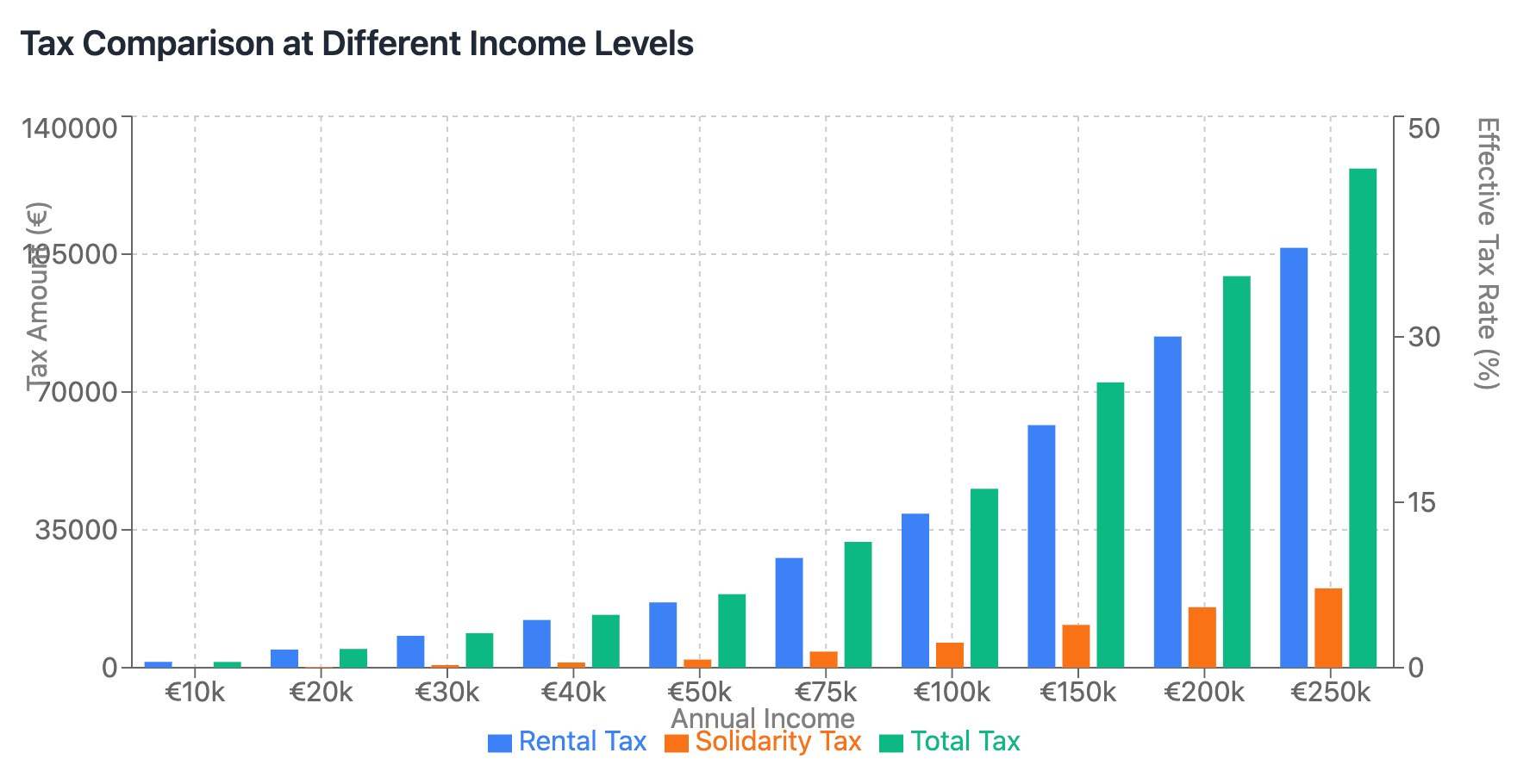
Online Short Term Rental Tax Calculator
Preparing for the October 2025 Deadline
October 1, 2025, marks the enforcement of updated rules designed to bring more transparency and control to the platform-based accommodation economy. New legislation set to roll out includes a national registry for short-stay management companies and mandatory data sharing with tax authorities. Online platforms will be obliged to deactivate listings that lack a valid PRN or fail to comply with updated guidelines. Failure to comply could result in listings being deactivated automatically. Owners must prioritise compliance to avoid penalties up to €20,000. Key steps include:
Safety Upgrades: Install smoke detectors, fire extinguishers, and emergency exit signs, and obtain electrical inspection certificates
Documentation: Secure liability insurance, pest control certifications, and first-aid kits
Tax Adjustments: Factor in higher nightly fees and VAT for commercial operations
Professional Guidance: Consult legal experts to navigate zoning laws and tax implications, particularly for mixed-use properties
Updated Guidelines for Airbnb Hosts
The most notable upcoming changes involve data sharing, income thresholds, and operational oversight. Platforms like Airbnb and Booking.com will be required to submit transaction data directly to the AADE. Mandatory inspections, announced 10 days in advance, will verify compliance, and obstructing inspectors risks €5,000 fines, doubling for repeat offences. Hosts who exceed income caps or fail to disclose necessary tax IDs may face automatic listing removal or fines. Hosts converting to long-term leases receive a three-year income tax exemption, incentivising shifts to alleviate housing pressures. In densely populated tourist areas, local municipalities may also request limits on the number of days a property can be rented or introduce zoning criteria to preserve residential character.
Summing Up Short Term Rentals
The evolving regulatory landscape reflects efforts to harmonise tourism growth with sustainability. The shift toward flexible travel has permanently altered the way homes are utilised across the country. While stricter rules may raise operational costs, they aim to enhance safety, reduce tax evasion, and stabilise housing markets. As the 2025 regulatory updates approach, those participating in the market should be proactive—ensuring that their assets remain competitive, lawful, and aligned with the emerging standards of hospitality and urban planning.