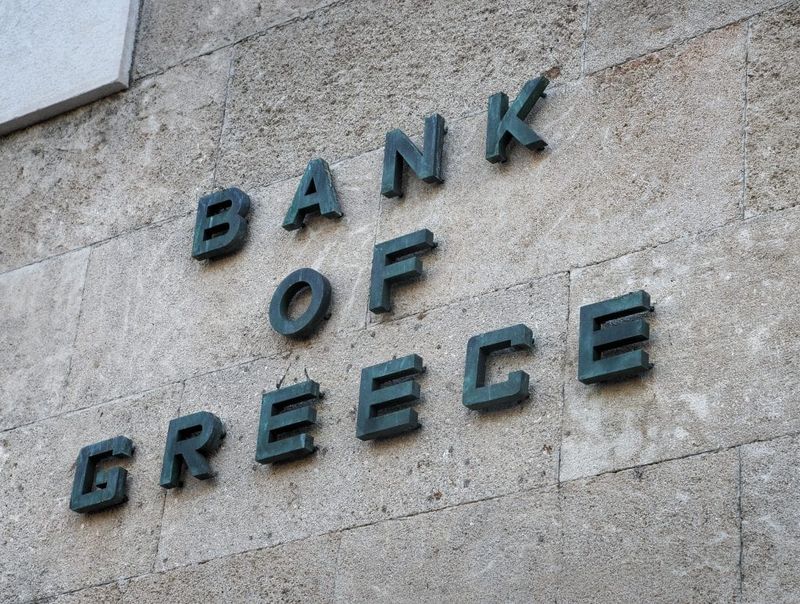
The primary entity that oversees banking regulations and operations in the country is the Bank of Greece (Τράπεζα της Ελλάδος). It serves as the central bank of the Hellenic Republic. The country's financial infrastructure operates within the broader European Central Bank (ECB) framework, meaning monetary policy originates from Frankfurt rather than Athens.
This Eurozone membership creates unique dynamics: the BoG serves as the national supervisory authority, but ultimate monetary control rests with European institutions.
Since the country is a member of the Eurozone, it participates in the Single Supervisory Mechanism (SSM). This means the ECB has ultimate authority over the largest banks. Direct Supervision: The ECB directly supervises the four "significant" banks:
Alpha Bank
Eurobank
National Bank of Greece
Piraeus Bank
As of October 2024, these major lenders—National Bank of Greece, Piraeus Bank, Eurobank, and Alpha Bank—collectively controlled approximately 93.8% of the nation's banking assets.
The Bank of Greece publishes on a monthly (or quarterly) basis data on bank deposits and credit, as well as on the key monetary aggregates. The HBA (Hellenic Bank Association) as of end of 2023, comprehended 20 members, 9 of them are regular and 11 are associated.
The country's economy has sustained its robust expansion while further enhancing its fiscal and financial health. Since 2021, the economy has experienced cumulative growth of 20 percent—with real GDP per capita at 90 percent of the pre-Global Financial Crisis (GFC) level, up from 73 percent in 2020.
The public debt-to-GDP ratio has decreased by more than 55 percentage points during this period, bolstered by strong growth, high inflation, and substantial fiscal consolidation.
Top 5 Largest Greek Banks
Based on total assets, branch networks, and ATM infrastructure, five banks emerge as the sector's primary players—though the gap between the fourth and fifth largest reveals a significant tier separation.
Piraeus Bank S.A. - The Asset Leader
With total assets of €76.45 billion, Piraeus Bank claims the top position among the country's financial institutions. The bank operates an extensive physical network of 378 branches complemented by an impressive 2,061 ATMs.
National Bank of Greece - The Historic Pillar
The most historically significant lender, the National Bank of Greece (Ethniki Trapeza), holds €74.58 billion in assets across 356 branches with 1,476 ATMs.
Alpha Bank S.A. – The Digital Innovator
Alpha Bank manages €66.78 billion in assets through a more streamlined network of 251 branches and 1,191 cash machines.
Eurobank S.A. – The Balanced Operator
Eurobank's €62.32 billion asset base supports 268 branches and 1,087 ATMs.
Optima Bank S.A. - The Significant Gap
The fifth position reveals a dramatic shift in scale. Optima Bank operates with €3.86 billion in assets—roughly 6% of Piraeus Bank's holdings—alongside just 28 branches and 40 ATMs.
For foreign clients, this concentration suggests that selecting among these four leaders provides access to the most comprehensive services, strongest capitalisation, and widest physical and digital infrastructure.
International Banks in Greece
The local banking system consists of 19 credit institutions that are branches of commercial banks incorporated in other EU member states, including four Europe-based subsidiaries of U.S.-headquartered banks (Bank of America, Citibank, Goldman Sachs, and J.P. Morgan). Other popular institutions included are BNP Paribas, Deutsche Bank, Bank of China and Santander.
International banks in the country typically cater to corporate clients, institutional investors, and high-net-worth individuals rather than standard retail customers. Most lack extensive branch networks or ATM infrastructure. For average expatriates or property investors, these institutions offer limited practical utility compared to the major local retail banks.
However, if you're a corporate client, business owner with international operations, or someone requiring specialised investment banking services, these foreign institutions provide valuable alternatives with global connectivity and specialised expertise unavailable from domestic lenders.
Can Foreigners open bank accounts?
Foreigners can open a bank account in the country if they are at least 18 years old. However, it is required by given foreigners to obtain a Greek TIN (AFM) to open the account, which is a 9-digit tax identification number issued by the local tax authorities. AFM is issued free of charge in about half an hour.
The country's financial institutions categorise international applicants into distinct groups: EU citizens, non-EU residents with legal Hellenic residence, and complete non-residents. Each category faces different requirements and available account types, though all can ultimately access banking services.
In addition to the AFM, you will also need to provide several other documents, including your passport, recent utility bills, a work certificate and an income declaration or tax return.
A foreigner without a residence permit in the country must personally apply to a bank branch to open an account. While some banks offer online initiation for residents, the personal visit remains mandatory for most foreign applicants.
Following account approval, you'll typically receive temporary access credentials immediately, with permanent debit cards and online banking credentials.
Which Bank is Best for Foreigners?
For international clients, the four major lenders generally provide the most comprehensive services, English-language support, and digital infrastructure. Not all local banks are equally accommodating to non-residents.
Piraeus Bank, for example, has developed specialised products like the "Yellow Account" specifically designed for foreign clients, with features tailored to international transactions and property management.
The National Bank of Greece (NBG) mobile banking app is designed to be straightforward and user-friendly, even for people who do not speak the local language. The interface is modern, clean, and structured around simple menus for accounts, cards, payments, and transfers. For foreigners, the experience is surprisingly smooth. The app is fully available in English, including menus, transaction flows, notifications, and onboarding instructions.
Alpha Bank and Eurobank similarly maintain dedicated international departments.
Together with a fintech company, one of the country's systemic banks, Piraeus Bank, has recently launched a fully digital bank Snappi, which operates without physical branches and provides a seamless, entirely online banking experience, signalling that digital-first options are emerging for tech-savvy clients.
Opening a Hellenic bank account doesn't automatically create tax residency, but it does create certain reporting obligations both in the country and potentially in your home country.
Which Banks are Most Likely to Offer Loans to Foreigners?
According to analysis by leading real estate firms, based on comparative data from the BoG's quarterly housing loan disbursements against overall property turnover, an estimated 80% of transactions in the local market remain cash-funded as of early 2025.
Eurobank has positioned itself as the most accessible option for international property buyers. It has a dedicated “How to take out a mortgage loan for non-residents” page. Critically, the bank explicitly markets mortgage products designed for non-residents, streamlining documentation requirements and offering English-language support throughout the application process. They offer up to 60% of the value for non-residents, and higher for residents. Their established foreign loan processes and willingness to accept overseas income documentation make them the go-to institution for many international buyers.
Alpha Bank operates a dedicated "Mortgage Loan for Foreigners" product line, with loans starting from €15,000 and up to 25 years. The loan offers flexibility in the amount, term and interest rate type, addressed to individuals living in an EU or non-EU country. Alpha Bank allows remote application processes and accepts power of attorney arrangements, reducing the need for multiple trips to the country.
At Piraeus Bank you do not need to have your tax residency locally in order to apply for a loan, making this institution particularly attractive for buyers maintaining primary residence elsewhere.
Although mortgage lending is legal in the Hellenic Republic, in practice, banks do not issue loans to local or foreign buyers of real estate. The exception is large local companies that have a good reputation in the market. While this assessment may be somewhat pessimistic, it captures the conservative lending culture. Foreign buyers with strong financial profiles, substantial down payments, and established relationships with local banks have the best approval prospects.
Final Remarks: Your Path Forward in Greek Banking
Whether you're establishing residency in the Mediterranean, investing in Hellenic property, or simply seeking European banking access, understanding the landscape empowers informed decision-making. The four systemic institutions—Piraeus Bank, National Bank of Greece, Alpha Bank, and Eurobank—collectively control over 93% of banking assets and offer comprehensive services designed for both domestic and international clientele.
For those seeking mortgage financing, recognize that conservative lending practices favour applicants with substantial down payments, verifiable overseas income, and patience throughout the approval process. The sector's ongoing digital transformation offers unprecedented convenience. Mobile banking applications now provide full English-language support, instant transfers, and account management from anywhere globally.
As the Hellenic Republic continues outperforming European growth averages and attracting international investment, its banking system evolves in tandem. The infrastructure, expertise, and regulatory frameworks now exist to serve foreign clients effectively.