Athens' thriving port city is emerging as a prime real estate investment opportunity in 2025. Located just 12 kilometers from the capital, this bustling maritime hub is transforming into a perfect blend of historical significance and modern amenities. Visitors can enjoy newly renovated waterfront areas, expanded cruise terminals, and improved transportation connections to both Athens and the nearby islands.
This coastal city offers a unique proposition for property investors. Ongoing urban renewal, upgraded transit links, and expanding business activity have turned the area into one of Greece's most promising real estate markets. Let’s explore what makes it an exceptional choice for your next vacation stay.
Key Takeaways:
The port city has transformed from primarily a transit hub to a destination worth exploring, combining maritime heritage with modern amenities.
The city's strategic location, just 12km from Athens, makes it an ideal base for exploring both the capital and the Greek islands.
Multiple transportation options (metro, suburban railway, buses, and trams) provide easy access from Athens and the international airport.
Visitors can experience authentic Greek urban life through local markets, seafood tavernas, and cultural events that showcase the city's unique character.
History
Its history dates back to ancient Greece, when it first served as the main port of Athens in the 5th century BC. In earlier centuries, Athenians relied on Phaleron Bay, but marshes made access difficult. Around 493 BCE, Themistocles persuaded his fellow citizens to fortify the present-day harbor, completing defenses after 479 BCE and establishing it as Athens’ naval base.
The port played a key role during the Golden Century, contributing to Athens’ dominance at sea. After periods of decline under Roman and Byzantine rule, it was revived in the 19th century as the newly independent Greek state's official maritime gateway.
The modern revival began when architect Stamatis Kleanthis redesigned the area in 1834. The opening of the Corinth Canal and the Athens-Port railway further boosted its importance. Despite WWII devastation, the city rebuilt and expanded. In 2016, COSCO Shipping acquired a 51% stake in the Port Authority for €280 million, later increasing it to 67% by 2021.
Today, the city preserves its past through archaeological sites, maritime museums, and traditional neighborhoods, blending history with vibrant urban life.
Key attractions include the main port, the Archaeological Museum, and a variety of cruises and harbor tours. The historic bank headquartered in the city, founded in 1916, played a crucial role in supporting trade and shipping and is now one of Greece’s leading financial institutions.
Piraeus Bank
One of Greece's leading financial institutions, Piraeus Bank has deep roots in the country's maritime economy. Founded in 1916 to support growing trade and shipping activity in the port city, it has evolved considerably over more than a century. The bank began trading on the Athens Exchange in 1918, was nationalised in 1975, and later privatised in 1991—a pivotal step in its modern expansion.
Initially focused on maritime financing, the bank broadened its services to meet the financial needs of individuals and businesses nationwide. After navigating the challenges of Greece’s financial crisis in the 2010s, it re-emerged with robust digital banking tools and a renewed emphasis on local enterprise support.
Today, the institution’s distinctive yellow signage is visible throughout the area, with its flagship branch located near the central port. This branch offers tailored services for both residents and international clients, reflecting the bank’s ongoing role in the region’s economic development.
Map of Piraeus
The urban layout is divided into distinct areas. The central district houses ferry terminals, while Pasalimani and Mikrolimano offer scenic marinas and waterfront dining. Kastella, perched on a hill, provides panoramic views and charming streets.
Modern maps highlight efficient public transportation options, including the Metro Line 1 connecting to Athens, the suburban railway, and the newly expanded tram network.
Spend your morning outdoors exploring the scenic coastline. Start your coastal walk from the metro station, following the harbour past the iconic lion statue at its entrance and the historic Naval Academy.
Continue towards Peiraiki and Zea Marina, before reaching the picturesque Mikrolimano, a perfect spot for a seaside coffee or fresh seafood. The entire walk takes about 2–3 hours, offering breathtaking views, a glimpse of maritime history, and a true feel of the areas’ vibrant charm.
Transportation to Piraeus
Transit options are excellent. Metro Line 1 connects the port to central Athens in 20 minutes. The suburban railway and bus routes from the airport offer easy access. Inside the city, trams, taxis, and a bike-sharing program make getting around easy.
For those arriving from Athens International Airport, the suburban railway offers direct service to the port city with comfortable, air-conditioned trains. Bus routes X96 and X97 also connect the airport to the port area, operating 24/7 for travelers with early or late arrivals.
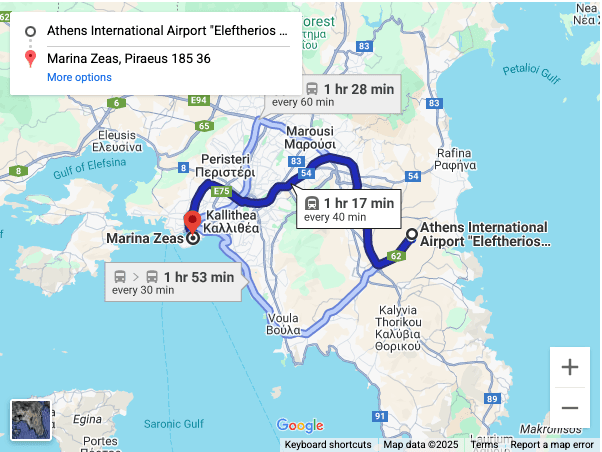 source: Google.maps
When planning your journey, the Athens Transport Authority app provides real-time updates on all public transportation options, making navigation to and around the area seamless for every traveler.
University of Piraeus
Founded in 1938 as the School of Industrial Studies, it has evolved into a comprehensive university with nine academic departments serving over 20,000 students. The University of Piraeus ranks among Greece's most respected educational institutions, offering quality higher education with a special focus on business, economics, and maritime studies.
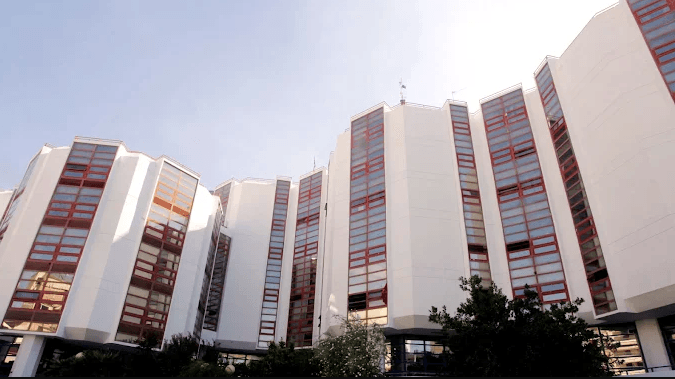 source: UniPi.com
Its strategic location near Greece's largest port creates unique opportunities for research and industry partnerships, particularly in shipping, logistics, and international trade. The main campus, situated just 1 kilometre from the port, features modern facilities including state-of-the-art computer labs, a specialised maritime studies library, and recently renovated lecture halls.
International students appreciate the university's English-taught master's programs and exchange opportunities with partner institutions worldwide. The university's research centres actively contribute to solving real-world challenges facing the maritime industry and Greek economy. Visitors can explore the campus during regular business hours, with the university museum showcasing the institution's history and achievements in advancing Greek maritime education and research excellence.
Piraeus Tower
Originally built in 1972 but left unfinished for decades, this 84-meter skyscraper has been transformed into a modern, sustainable building that symbolises areas' revival. The Tower stands as the defining landmark of the city's skyline in 2025, following its complete renovation and reopening. The tower now features a striking glass facade with smart energy systems that reduce its environmental footprint while creating a stunning visual presence visible from arriving ferries.
Visitors can enjoy the panoramic observation deck on the 22nd floor, offering breathtaking 360-degree views of the port, Athens, and the Saronic Gulf.
The lower floors house premium office spaces for shipping companies and tech startups, while mid-level floors contain conference facilities and exhibition spaces dedicated to maritime innovation.
The ground and first floors welcome visitors with high-end restaurants, cafes, and retail shops showcasing Greek products.
The Port City Today
As Greece's primary maritime gateway, the port handles over 20 million passengers annually, connecting mainland Greece to its many islands through regular ferry services. The area today thrives as a dynamic fusion of working port, cultural hub, and tourist destination. Beyond its maritime functions, the area boasts revitalised neighbourhoods where locals and visitors enjoy authentic Greek experiences. The once-industrial areas around the port have transformed into vibrant districts with stylish cafés, innovative restaurants, and boutique hotels.
Cultural attractions include the renovated Municipal Theater, the Archaeological Museum with its impressive bronze statues, and regular festivals celebrating the city's maritime heritage.
Local markets like the bustling Agora offer fresh seafood and regional specialties, while the scenic marina areas of Mikrolimano and Marina Zea attract visitors with their picturesque settings and waterfront dining.
Despite increasing tourism, the area maintains its authentic character as a living, working city where visitors can experience genuine Greek urban life alongside historic sites and modern attractions, making it much more than just a transit point on the way to the islands.
Conclusion
The port city in 2025 represents the perfect blend of Greece's rich maritime history and its dynamic future. From its ancient origins as Athens' vital naval base to its current status as a revitalised urban centre, offering visitors an authentic Greek experience beyond the typical tourist destinations.
The city's impressive transformation is evident in landmarks like the renovated Tower, its modernised port facilities, and the thriving university that fuels innovation in maritime industries. Whether you arrive in the port area as a gateway to the Greek islands, for business at its financial institutions, or to explore its cultural attractions, you'll discover a city proud of its heritage yet confidently moving forward.
With excellent transportation connections, diverse neighbourhoods to explore, and genuine local experiences, the area rewards travellers who venture beyond Athens to discover this historic port city. As Greece continues to evolve as a destination, the port stands ready to welcome visitors with its unique character, maritime charm, and authentic Greek hospitality.
Sources:
Wikipedia . Wikipedia, The Free Encyclopedia. Retrieved March 24, 2025.
Britannica. Encyclopaedia Britannica. (n.d.). Retrieved March 24, 2025.
Greece.org. Retrieved March 24, 2025.
P. Bank. (n.d.). Retrieved March 24, 2025.
P. Holdings. (n.d.). Historical course of the group. Retrieved March 24, 2025.
Blue Star Ferries. (n.d.). Retrieved March 24, 2025.
Google Play. (n.d.). AT&T Mobile Transfer App. Retrieved March 24, 2025.
UniPi. (n.d.). Retrieved March 24, 2025.
P. Tower. (n.d.). Retrieved March 24, 2025.
Piraeus Chamber of Commerce and Industry. (n.d.). Retrieved March 24, 2025.
Archaeological Museums of Greece. (n.d.). Retrieved March 24, 2025.