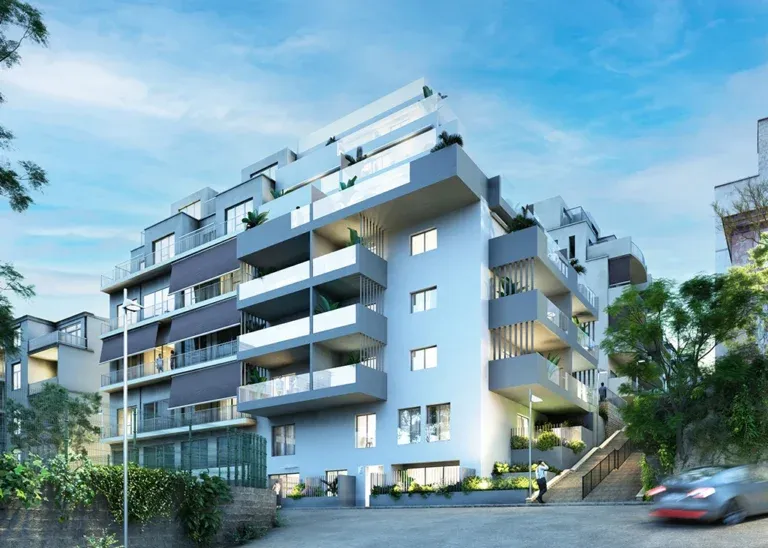
Greece is witnessing a profound shift in its real estate and hospitality landscape—one shaped by changing travel habits, evolving work lifestyles, and smart investment strategies. Whether driven by the growing remote workforce, demand for adaptable living spaces, or the promise of strong rental yields, a new type of property is taking center stage. These modern, fully equipped units are emerging as the preferred choice for both guests and investors, offering a compelling mix of flexibility, comfort, and long-term value. This article unpacks the key factors behind this rising trend and why it’s gaining momentum across the country’s most strategic urban and coastal locations.
Key Takeaways
The country boasts over 3,500 hospitality units (growing at 8% annually), clustered in Athens, Thessaloniki, and coastal destinations.
Managed residences outperform hotels during economic turbulence, sustaining 85%+ occupancy through flexible pricing and cost efficiency.
Top stays include Piraeus Gate (flagship eco-friendly suites in Piraeus) and The Mediterranean Suites (waterfront luxury units near Port of Piraeus).
Investors target 6–9% returns in the hospitality real estate market, driven by tourism, urban renewal, and visa incentives.
Remote workers fuel 40% annual demand growth for tech-equipped extended-stay suites, with co-living hubs rising in popularity.
The Rise of Serviced Apartments in Greece
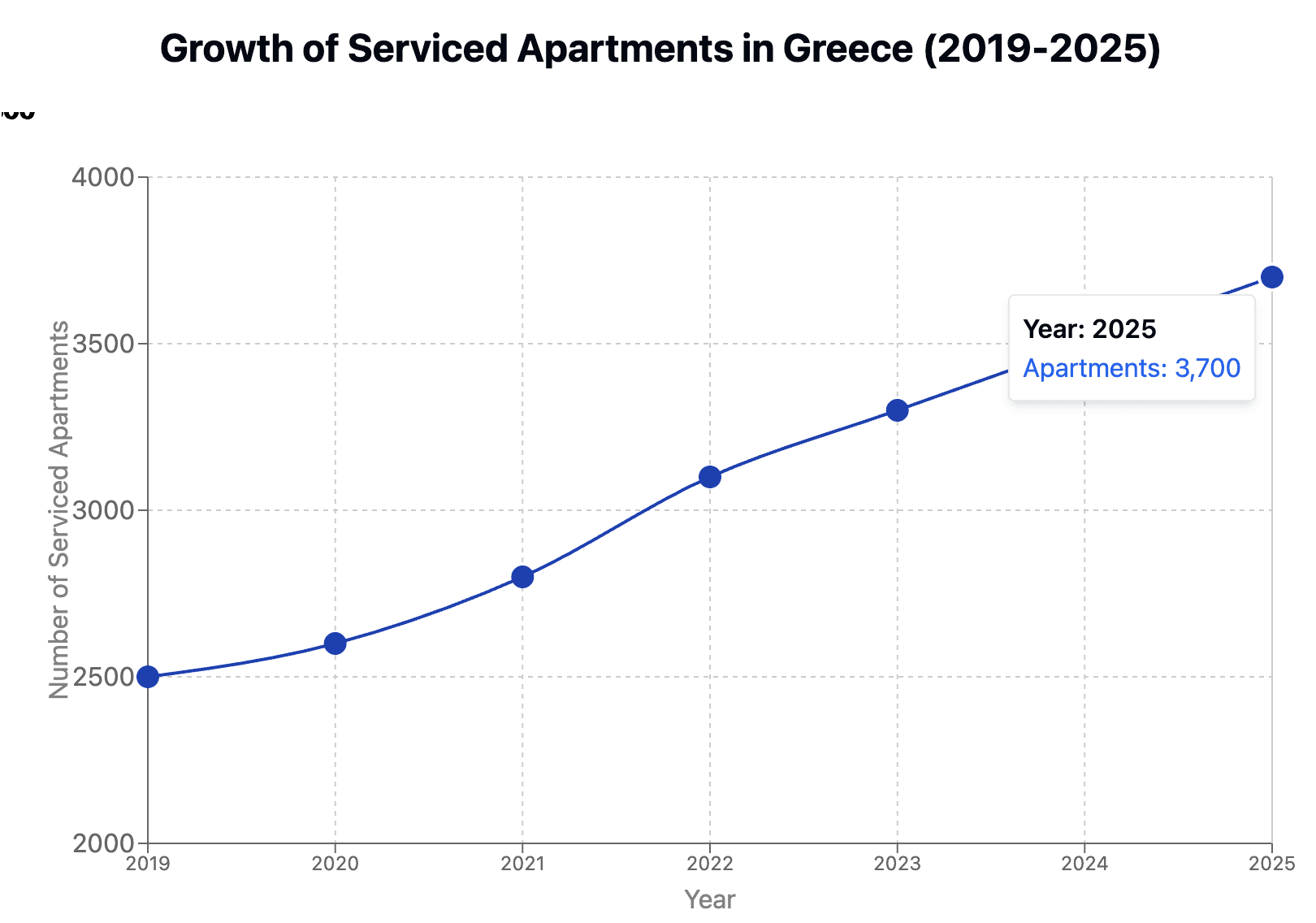
The country's hospitality sector is evolving rapidly, with managed stays emerging as a dynamic force in the accommodation landscape, with their numbers growing 48% from 2019 to 2025. What began as a niche offering concentrated primarily in Athens' business districts has evolved into a sophisticated, diversified market spanning the capital's residential neighbourhoods, Thessaloniki's commercial zones, and premium island destinations across the Cyclades and Dodecanese archipelagos.
This surge reflects converging demand from diverse segments: institutional investors seeking 7-9% annual yields, digital nomads leveraging Greece's new remote work visa for 1-12 month Mediterranean stays, corporate clients relocating employees for business assignments, and extended-stay tourists prioritizing residential space over traditional hotel rooms.
The sector's financial performance has captured attention from private equity funds, real estate investment trusts (REITs), and family offices seeking diversified hospitality exposure.
From investors to digital nomads, demand for flexible, high-quality accommodations is reshaping the market. Let’s explore the latest trends, backed by insights from Savills’ research.
 Source: dkg-development.com
How Many Serviced Apartments Currently Exist in Greece?
As of 2024, the country hosted over 3,500 investment assets, a figure growing at 8% annually, driven by post-pandemic travel shifts and investor interest (Savills Q1 2024 Report). These properties—often termed all-inclusive suites or managed lodging—are concentrated in Athens, Thessaloniki, and tourist hotspots like Piraeus. Unlike traditional hotels, these units blend residential comfort with hotel-style amenities, appealing to both short-term travellers and long-term guests.
The sector’s expansion aligns with the tourism rebound, with international arrivals surpassing pre-2019 levels. Investors are capitalising on this demand, converting underutilised buildings into luxury managed residences or developing new projects tailored to modern travellers.
Are Investment Properties Better Positioned to Weather the Storm?
Economic uncertainty and rising operational costs have hit traditional hotels hard. However, managed properties demonstrate remarkable resilience. Here’s why:
Lower Overheads: Compact designs and hybrid staffing models reduce costs compared to full-service hotels.
Flexible Pricing: Units can adjust rates seasonally or offer extended-stay discounts, attracting budget-conscious guests.
Diverse Demand: They cater to corporate travellers, families, and digital nomads—a broader audience than conventional hotels.
Savills’ 2023 European Hospitality Report notes that investment properties, maintained 85%+ occupancy rates during economic downturns, outperforming hotels by 15–20%. Their adaptability makes them a “recession-resistant” asset class, especially in cities like Athens, where tourism and business travel intersect.
 Source: piraeusgate.com
Best Serviced Apartments in Greece(Athens)
From urban hubs to idyllic islands, top managed stays combine location, design, and amenities:
The Mediterranean Suites (Piraeus): Prime waterfront investment property steps from the Port of Piraeus, offering panoramic sea views and tailored services for cruise passengers and business travellers.
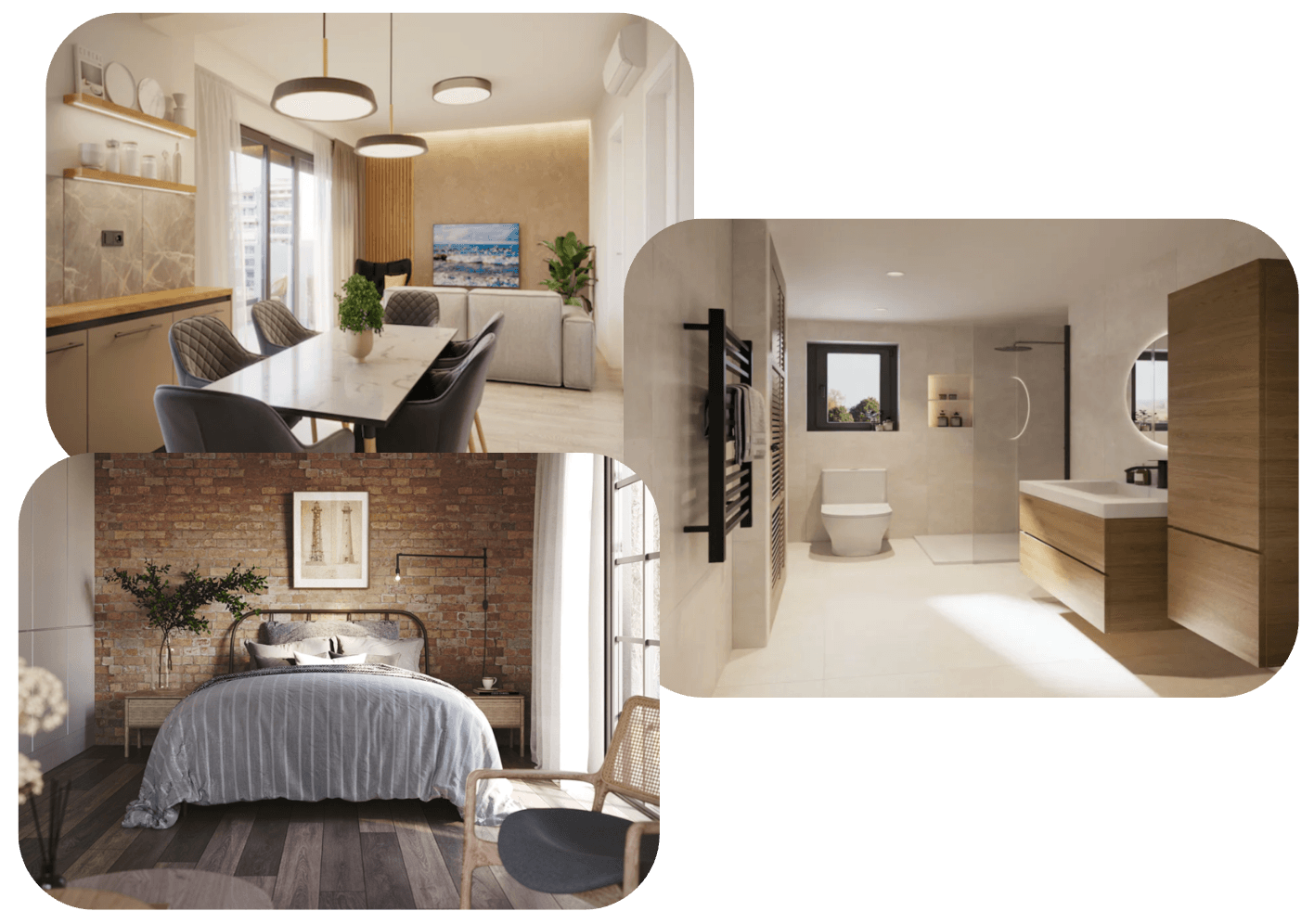
Piraeus Gate (Piraeus): Our flagship project, redefining luxury with managed residences that blend rooftop terraces, smart-home technology, and eco-friendly design—just minutes from Athens’ metro network.
Azure Residences (Santorini): Luxury cliffside villas with private pools, blending Cycladic charm with concierge services.
Moxy Thessaloniki: A Marriott-affiliated property offering compact, stylish managed accommodations for millennials and business travellers.
Cretan Haven (Chania): Family-friendly units with kitchens, ideal for longer stays.
These properties highlight the shift toward experiential lodging, where personalised service and local immersion matter as much as comfort.
Managed Properties for Sale: A Lucrative Investment?
Investors are flocking to Hellenic managed stays market, drawn by strong returns (6–9% yields, per Savills Greece). Key opportunities include:
Urban Regeneration: Converting outdated offices or living spaces into premier managed residences in Athens or Piraeus.
Coastal Developments: Building mixed-use complexes in Mykonos or Corfu, combining holiday rentals with branded suites.
Turnkey Purchases: Buying fully managed units in projects like The Mediterranean by Wyndham, which handles operations for owners.
With Golden Visa programs attracting foreign buyers, high-end managed real estate is particularly sought-after. The Savills Q1 2024 Report emphasises that demand for investment assets for sale outpaces supply in prime locations, signalling long-term growth potential.
The Emergence of Digital Nomads: Fuelling Demand
The Digital Nomad Visa, launched in 2021, has lured remote workers seeking sun, culture, and affordability. This cohort prefers tech-ready suites with high-speed Wi-Fi, coworking areas, and month-long rental options.
Cities like Athens and Heraklion now feature co-living spaces tailored to nomads, such as NomadX Crete and Laurel in Athens. These hybrids of managed stays and community hubs offer weekly networking events and Greek language classes, aligning with the “workstation” trend.
Savills’ research notes a 40% annual rise in nomad-friendly bookings since 2022, with landlords retrofitting properties to meet this demand. Expect more managed co-living residences to emerge as the country cements its status as a remote work hotspot.
When and where did we see the first Investment Properties?
As a solution for professionals who travel regularly, investment properties have been around for almost a decade. They first appeared in America but were not geographically limited there. It is a service that has been carefully studied and developed in order to serve the modern professional who needs to live in a country for a short or longer period of time. However, the concept remains the same over time, "live like a local" with the difference that it is now upgraded to a generous experience.
It is worth noting that the first non-professional managed stays were mainly aimed at travellers, as recorded London’s literature in the 1930s and in the more recent America’s history in the 20th century.
Today these asset Classes provide high quality accommodation while maintaining standards in terms of facilities and security.
Conclusion
The Hellenic investment property asset class sector is thriving, driven by tourism resilience, investor confidence, and the digital nomad wave. Whether you’re seeking a luxury suite in Santorini, a city-centre managed residence, or a turnkey investment, this market offers versatility and value. As demand grows, these properties are redefining what it means to live, work, and explore this incredible country—one seamless stay at a time.
Sources:
Savills. (2024). Spotlight European Hospitality - Q1 2024. Retrieved from https://pdf.euro.savills.co.uk/european/spotlight-european-hospitality---q1-2024.pdf
Savills Greece. (2023). Greek Property Market: Investment Opportunities in Hospitality. Retrieved from https://www.savills.gr/research_articles/262959/301061-0
Savills. (2023). European Hospitality Trends Report 2023. Retrieved from https://www.savills.com/research_articles/255800/365458-0