
Foreign capital allocation in the territory increased by 448.90 EUR Million in January of 2025. FDI’s in the country averaged 218.81 EUR Million from 2000 until 2025. The country has no restrictions regarding the nationality of the capital provider and no requirement for a criminal record check. A lot of new legislative incentives have been introduced in favour of international backers. For instance, the new Article 5A for investors – Tax Treatment and Benefits of the Income Tax Code
As the country continues to rebuild and modernise its economic infrastructure, strategic opportunities are emerging across multiple sectors, positioning the country as an attractive destination for global capital.
Key Takeaways:
Strong Growth Trajectory - Highlighting recent FDI figures and major stakeholder countries
Strategic Sector Opportunities - Focusing on tourism and renewable energy as prime venture areas
Improved Capital Allocation Framework - Summarising the regulatory reforms and incentives for capital providers
Balanced Approach Required - Acknowledging the challenges while emphasising the opportunities
Greek FDI's 2020-2025
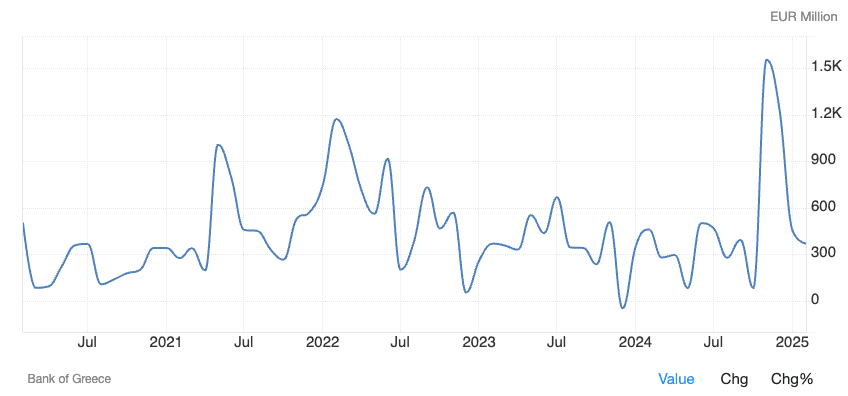
Cross-national Capital Flows Figures
The country's FDI landscape demonstrates remarkable resilience and growth potential in recent economic reports. The country has shown significant momentum in attracting international capital, with key indicators painting an optimistic picture for financial backers.
Offshore corporate funding in real estate have continued their growth trajectory this year, with Bank of Greece data showing €1.9 billion invested during the first nine months - a 17% increase compared to the same period in 2023.
Data from the Bank of Greece shows that the countries holding more FDI stocks (by immediate stakeholders) are Luxembourg (17.5%), Cyprus (11%), the Netherlands (10%) and Switzerland (6.7%).
The country's real estate market is red-hot. The Golden Visa program, offering residency permits for property assets over €250,000, has drawn €2+ billion since 2020, with Chinese, Turkish, and Middle Eastern buyers leading the charge.
By 2030, analysts predict FDI inflows could double, with renewables and tech accounting for over 40% of total capital commitments.
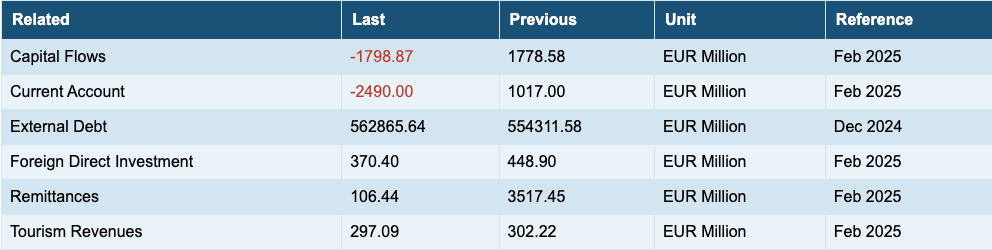
International Corporate Financing and Sustainability
But the Hellenic Republic isn’t just playing catch-up—it’s leapfrogging. With €32 billion from the EU’s NextGenerationEU program earmarked for green energy, digital transformation, and infrastructure, the stage is set for long-term growth.
Aiming to derive 35% of its energy from renewables by 2030, and investors are taking notice. Solar and wind projects are flourishing, supported by EU grants and tax incentives. Major players like Iberdrola and Enel have already committed billions, while offshore wind farms in the Aegean Sea promise untapped potential.
How Much Does Greece Make from Tourism?
The tourism sector is a cornerstone of its economy, generating €214.7 million in revenue in January 2025 alone. Below is a detailed breakdown of its financial impact, supported by recent data and projections:
Record-Breaking Revenue Growth
2023: Tourism revenues reached €20.6 billion, surpassing pre-pandemic (2019) levels of €18.17 billion.
2024: Revenues are projected to hit €22 billion, driven by over 36 million tourist arrivals (a 10% increase from 2023).
2025: The sector is off to a strong start, with January 2025 alone generating €214.7 million in revenue—a 30% year-on-year increase compared to January 2024.
Tourism accounts for ~20% of GDP and supports nearly 20% of all jobs (approximately 2 million people). In 2024, the sector’s direct contribution to GDP was estimated at 13%, with indirect impacts elevating this figure further.
Regulatory Reforms: Cutting Red Tape, Boosting Trust
The country has overhauled its financial commitments framework to compete globally. Key changes include:
Streamlined licensing: Permits for renewable energy projects now take months, not years.
Tax incentives: Up to 50% subsidies for green energy, tech, and R&D projects.
EU-aligned legal safeguards: Enhanced protections for intellectual property and dispute resolution (ICLG).
While bureaucratic delays persist, the government’s “fast-track” initiatives signal a commitment to improving ease of doing business.
What to consider if you invest in Greece
Investing in the nation offers lucrative opportunities but requires careful navigation of regulatory, geopolitical, and market-specific dynamics. Here’s a breakdown of key factors to weigh before committing capital:
Economic Strengths
Strategic Position and Market Access
EU and Eurozone Membership - Providing access to the European single market and monetary stability
Regional Hub - Serves as an economic gateway to the Balkans, Black Sea region, Eastern Europe, and Eastern Mediterranean markets
Key Industry Strengths
Maritime Powerhouse - Home to one of the world's strongest shipping sectors, with Greek shipowners controlling approximately 20% of global shipping capacity
Tourism Excellence - A world-leading destination with continued growth potential and venture opportunities in infrastructure upgrades
Post-crisis reforms have significantly strengthened the country's economic foundation, with notable improvements in financial management and labor market flexibility that have enhanced the country's competitiveness.
Economic Challenges
Financial and Structural Issues
Debt Burden - Persistent high public debt continues to constrain fiscal flexibility
Banking Sector Weaknesses - Affecting credit availability and economic liquidity
Limited R&D capital allocation - Hampering innovation and technological advancement
Business Environment Concerns
Bureaucratic Complexities - Administrative inefficiencies and expensive regulatory requirements
Market Structure Issues - Oligopolistic tendencies in many industries creating barriers to entry
Governance Challenges - Including corruption concerns highlighted by Transparency International
Conclusion
The country's acquisitions landscape is ripe with potential but demands a tailored, informed approach. Prioritize sectors aligned with EU priorities (green energy, tech), secure local expertise to navigate bureaucracy, and build flexibility for geopolitical or regulatory shifts. With proactive planning, the nation's resurgence offers a rare blend of growth and stability in Europe’s evolving economy. While challenges remain, key industry strengths, and ongoing reforms present opportunities for economic growth and ventures. Tourism, in particular, maintains strong long-term prospects, with related infrastructure development representing a significant opportunity area for investors looking beyond current market conditions.