As we navigate 2026, the landscape of foreign investment has evolved. No longer confined to the whitewashed alleys of Santorini, non-EU buyers are targeting specific urban centers and emerging hotspots. Here is a deep dive into where they are buying and why Greece remains a magnet for international capital.
Greece has become one of Europe’s most active destinations investors, driven by the Golden Visa programme, resilient price growth and attractive rental yields. In 2025–2026, foreign capital continued to flow into Athens, Thessaloniki and select island and coastal markets, even as investment thresholds rose and application volumes normalised.
Based on official data from the Bank of Greece the total foreign direct investments in the country for the year ending 2025 amounted to 11.3 billion Euros a 62,2% increase from 2024. The top 5 countries leading these investments are the UK, Netherlands, Germany, Cyprus and Switzerland.
Key Takeaways
€11.3 billion in total foreign direct investment flowed into Greece in 2025, a 62.2% increase year-on-year.
8,879 new Golden Visa permits were approved in 2025, with 32,702 active permits held by main applicants by mid-2026.
Athens Riviera & Piraeus lead non-EU investment, with southern suburb prices up 25% in two years and luxury coastal properties commanding €4,000–€8,000/m².
Rental yields of 4.5%–8.25% across key markets, with the €250,000 commercial conversion route emerging as the smart entry point for Golden Visa investors.
Golden Visa at a glance: scale and momentum
Greece’s Golden Visa programme grants a renewable five‑year residence permit to non‑EU nationals who invest in eligible real estate. Since its launch in 2014, the scheme has channelled over €10 billion into the Greek economy, with a record €2.32 billion invested in 2024 alone.
The country's legal framework has introduced incentives to attract international investors and high net worth individuals. Non-EU citizens considering relocation may benefit from assessing the interaction between the country’s investor residence permit programme and the Alternative Taxation Regime for foreign-sourced income.
In 2025, new approvals surged 95% to 8,879 permits, reflecting strong underlying demand and improved processing capacity.
By mid‑2026, the country had 32,702 active Golden Visa permits issued to main applicants (excluding family members), up 48.6% in just 12 months. Although new applications fell by around 39–44% in the first half of 2026 compared with the same period in 2025, authorities issued more permits than ever, clearing a large backlog from 2024–2025.
Where are non‑EU investors buying?
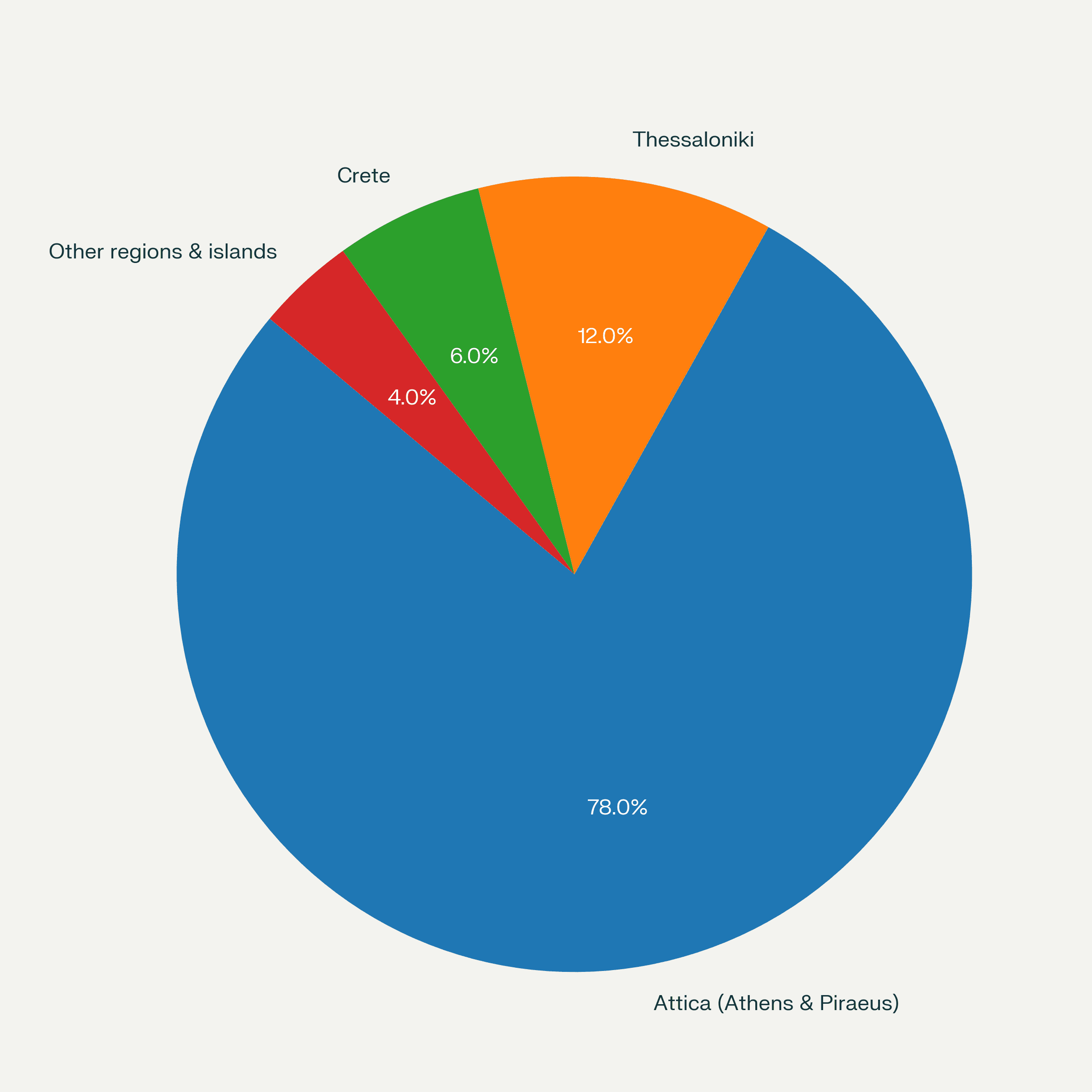
The flow of foreign capital is not uniform. It clusters in specific areas, driven by the dual engines of yield and lifestyle. The coastal stretch from Piraeus down to Sounio, known as the "Athens Riviera", is the primary destination for high-net-worth non-EU individuals.
Non‑EU investors are not choosing Greece by accident. Several structural factors make the country stand out in the European landscape:
Competitive entry prices and strong growth
Despite rapid appreciation, Greek property remains cheaper per square metre than most Western European capitals in 2026. Location still dictates everything. The coastal and suburban belt around Athens tops the table, while much of the northern and central mainland trades below €1,000/m². Crucially, the Athens–Thessaloniki gap is modest (€1,838 vs €1,509/m²), but the distance from the top region to the cheapest is a striking 3.4×.
Within the Athens prefecture, the prime northern and southern suburbs lead. Filothei (€5,510/m²) and Glyfada (€4,739/m²) sit at the top; the most affordable municipalities, such as Agia Varvara (€971/m²), cost less than a fifth of the priciest. The City of Athens itself sits mid-table on price but dominates on volume.
Attractive rental yields
Gross rental yields in Greece typically range between 4.5% and 5.6% nationally, with some segments reaching higher levels:
Small apartments in central Athens can deliver up to 8.25% gross yield.
In Crete and parts of the Peloponnese, seasonal and long‑lease products often generate 5.5–7%
The Athens Riviera and port areas show indicative yields of 3.2–5.8%, depending on product type and lease structure.
To compare with real world data, DKG Development has multiple serviced apartments in the Piraeus area offering yields that are > 5% up to 7.5%.
For investors comparing with Lisbon, Barcelona, Rome or major northern European cities, these levels still offer relative value, especially when combined with yield potential.
Macro stability and foreign investment tailwinds
Foreign direct investment (FDI) in Greek real estate reached €2.75 billion in 2024, up 28.9% year‑on‑year, with foreign capital representing 43% of all foreign investment into Greece in 2025. And the number keeps climbing with total FDI to the country increasing by 62.2% in 2026 up to €11 billion.
This reflects broader confidence in the country's economic recovery and investment‑grade rating trajectory. Ongoing infrastructure project like the Ellinikon and Piraeus Gate. A tourism boom that underpins short‑term rental demand in many regions.
The Demographics of Non-EU Investment in Greece
The data shows a clear pattern: non‑EU investors are using the country not just for residency, but as a core European real estate allocation, prioritising markets with proven demand, transparent pricing and scalable rental strategies.
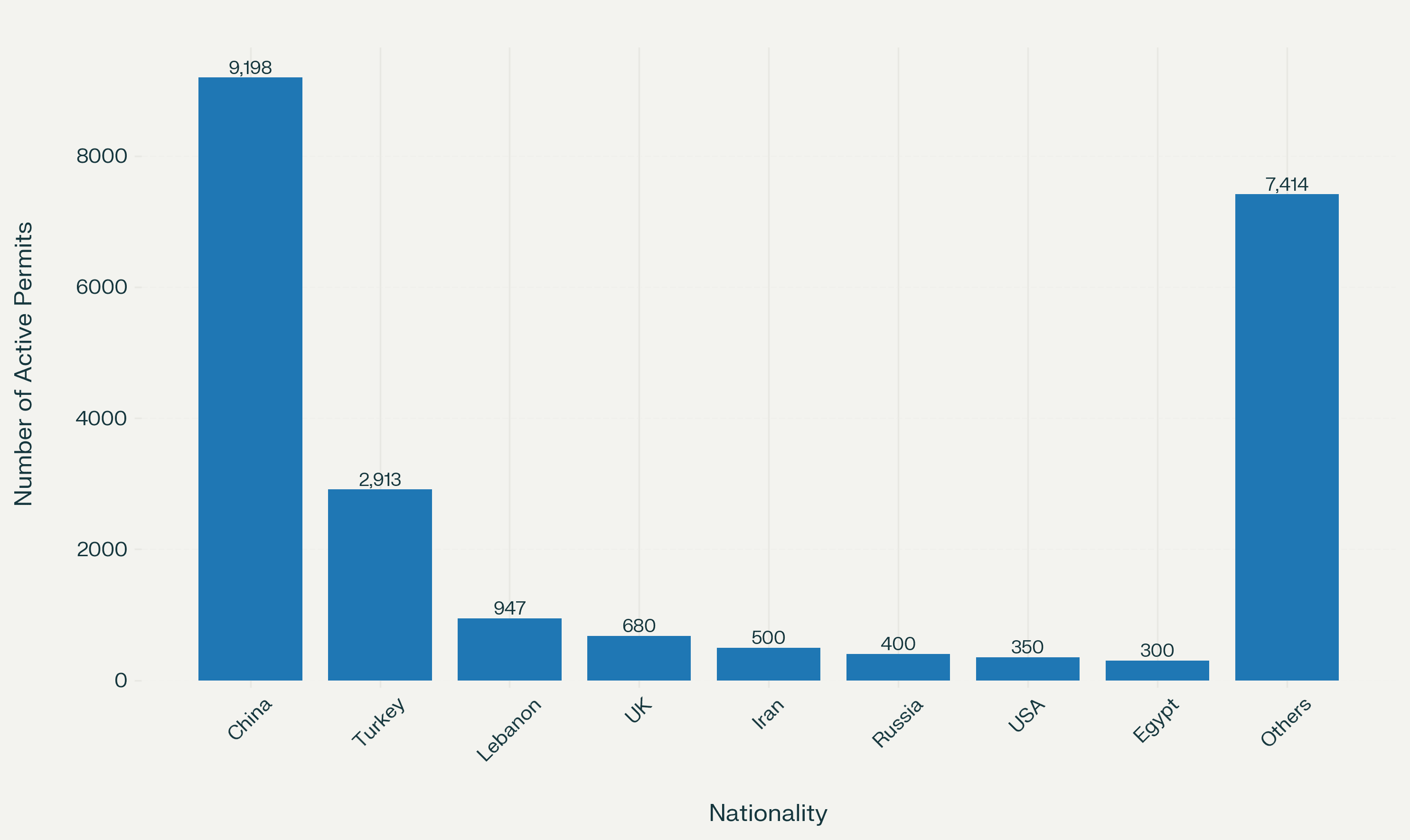
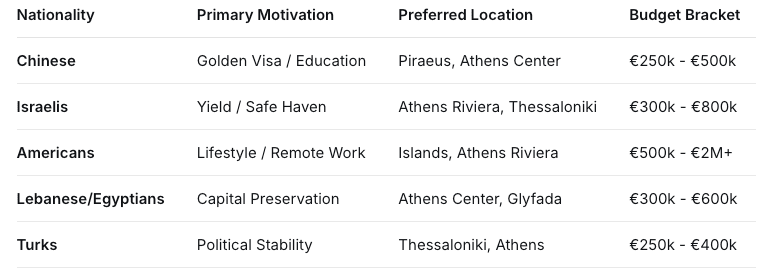
Who is buying: Israeli, Chinese, and Lebanese investors, as well as a rising number of American expatriates.
Prices in the Southern Suburbs have increased by nearly 25% over the past two years. A luxury sea-view apartment here can command anywhere from €4,000 to €8,000 per square meter, attracting buyers who want both a trophy asset and Golden Visa eligibility.
While the Riviera offers luxury, the port city of Piraeus offers logistics and capital growth. Piraeus has been a hotspot for Chinese nationals, largely due to the strategic presence of COSCO shipping, which manages the port. And which is now undergoing major urban redevelopment such as the Piraeus Gate project, which is building a new entrance to the port city.
Thessaloniki Greece’s second city has emerged from the shadow of Athens. It is attracting significant interest from Balkan neighbors, Turks, and Israelis. The area around the historic Ladadika district and the waterfront has seen a rental crisis due to high demand and low supply.
The Emerging Trend: The "Commercial Conversion" Loophole
While most Golden Visa investments now require €400,000 or €800,000, Greece has kept a lower €250,000 threshold for a specific type of asset: commercial properties converted to residential use.
This “conversion route” is increasingly popular among non‑EU investors who want to access central Athens, Thessaloniki or other high‑demand zones at a lower entry price, while adding value through renovation and repositioning.
As the standard real estate thresholds have doubled, sophisticated investors are pivoting. The Greek government, aiming to revitalize urban centers, kept the threshold at €250,000 for properties that are converted from commercial use (offices, old shops) to residential use.
This has created a new micro-market. Non-EU investors are now scouring the streets of central Athens for derelict office spaces. They buy them, convert them into high-spec lofts or boutique apartments, and secure the Golden Visa at a fraction of the cost of a standard luxury apartment.
The Advantage: This strategy removes the investor from the highly competitive housing market (which helps local affordability) while turning a profit in the tourism rental sector.
For assets to qualify the change of use must be fully completed and legally effective before the residence permit application is submitted. “Under construction”, “permitted but not finished” or “in progress” conversions do not qualify.
The Outlook of Greece's Residential Sector
As the data from 2025–2026 makes clear, Greece has cemented its status as one of Europe’s most dynamic destinations for non-EU real estate investment. The reasons are structural, not speculative: a Golden Visa programme that continues to process record numbers despite higher thresholds, property prices that still undercut Western European capitals, and rental yields that outperform most major cities. With €11.3 billion in total foreign direct investment and 8,879 new Golden Visa permits issued in 2025 alone, the flow of capital remains robust.
Geographically, the investment map is becoming more defined. The Athens Riviera attracts high-net-worth buyers seeking trophy assets and lifestyle, while Piraeus remains a hub for Chinese investors driven by port logistics and urban regeneration. Thessaloniki is rising as a northern magnet for Balkan and Israeli buyers, and the islands continue to draw lifestyle-focused buyers from the US and post-Brexit Britain.
Crucially, the market is evolving with the times. The surge in approvals has cleared backlogs, and the government’s “commercial conversion” route at €250,000 has created a new micro-market for sophisticated investors looking to add value while securing residency. For non-EU nationals, Greece is no longer just a holiday destination—it is a calculated, high-yield allocation in a stable European economy. As we move further into 2026, the twin engines of tourism and infrastructure investment look set to keep the Golden Map shining.