
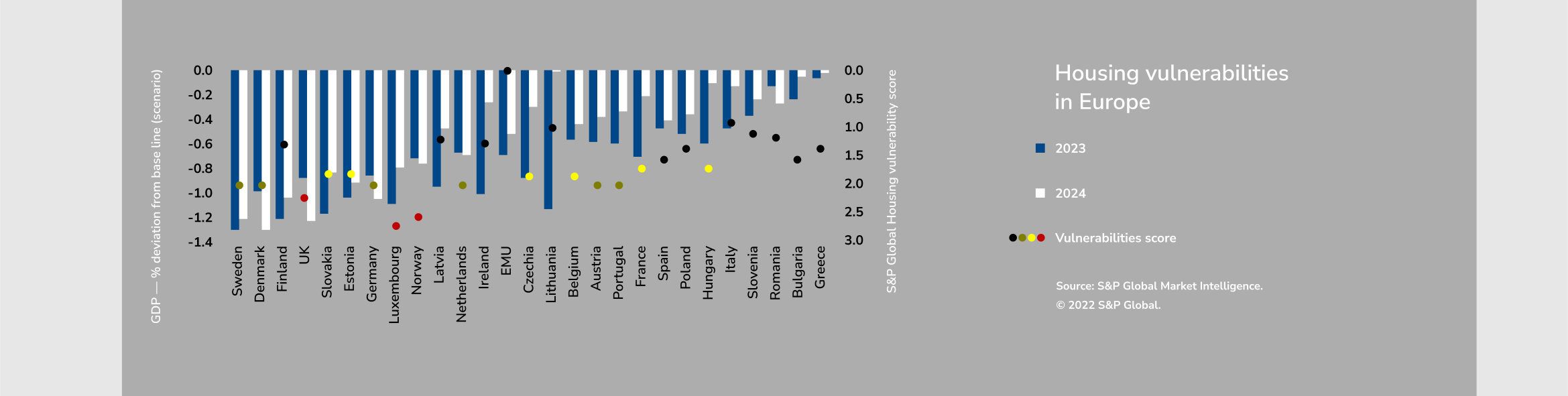
The bursting of the housing bubble threatens to make the European economy's recession deeper and longer, warns S&P Global Market Intelligence. A shock in the housing market could reduce eurozone GDP by 0.7% in 2023 and 0.5% in 2023, the stress test run by the rating agency shows. According to its models, the markets in Sweden, Denmark, the UK, Germany, Luxembourg, Norway, the Netherlands and the UK are the most vulnerable in Europe. In contrast, the Greek housing market is considered among the safest in the region.
S&P's baseline scenario only calls for a significant slowdown in house prices or even a mild decline, as the firm's analysts believe that the real estate market will find support in relatively strong labour markets, fiscal measures taken by governments against the price crisis and an expected slowdown in inflation.
But the agency stresses that risk has increased, especially in the most vulnerable markets. In the worst-case scenario, these markets could face a deeper and longer recession amid a decline in investment and consumption, exacerbated by the negative impact on the financial sector due to its links with housing markets.
The need for higher interest rates to address persistently high inflation or a significant rise in unemployment would lead to a significant increase in real estate risk, S&P points out.
Τhe stress test
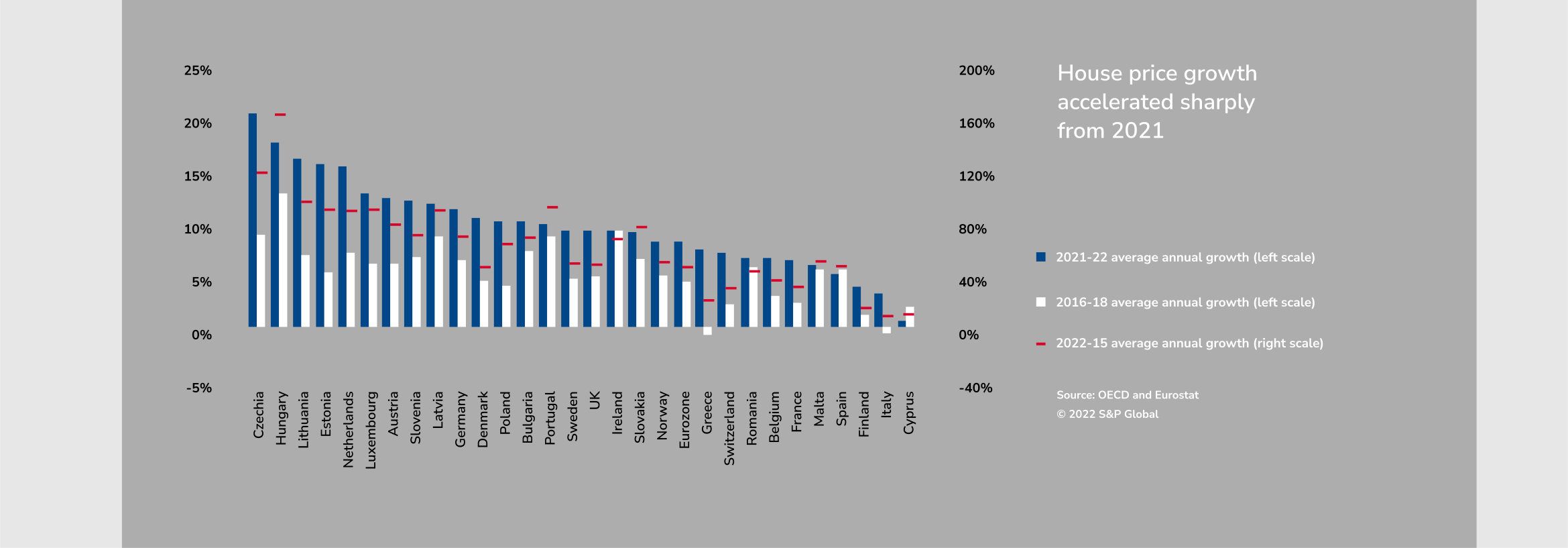
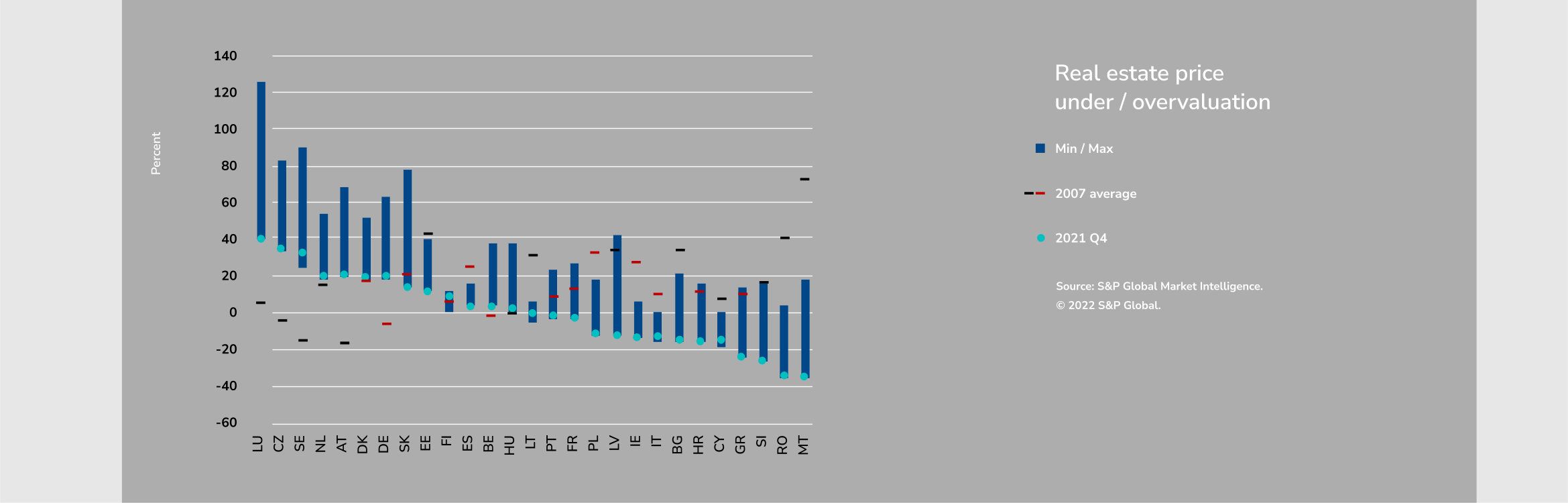
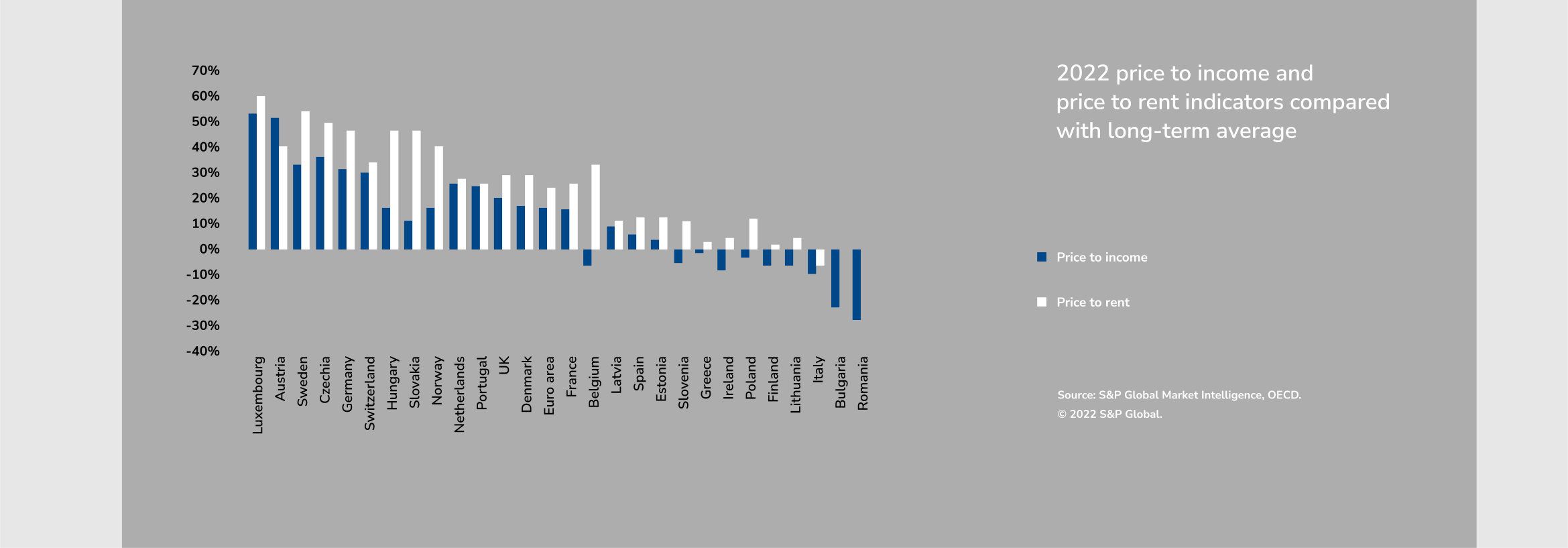
As analysts note, the rapid increase in house prices in many countries has outpaced the corresponding increase in incomes and rents, with the result that these markets are considered to be overvalued. The coming recession will squeeze real estate investment, increasing the chances of corrections, especially in markets where prices are too high.
In the housing market shock model that S&P "ran", analysts assumed that the real estate bubble correction (depending on how overvalued each market is). would begin in late 2022. The decline in home prices, combined with financial stress and lower liquidity, is leading to a reduction in investment.
The model shows that the shock will cause a 2% reduction in fixed investments in 2023 and a 1.7% reduction in 2024 compared to the baseline scenario. Consumption shows a corresponding decline of 0.1% and 0.2%.
Euro area GDP therefore falls by 0.7% in 2023 and 0.5% in 2024 relative to the baseline scenario.
Sweden, Finland, Denmark, Sweden, Finland, the United Kingdom, Slovakia, Estonia and Germany show the largest losses in GDP.
Greece, Bulgaria, Romania, Romania, Slovenia, Hungary and Italy are the countries expected to be least affected as they show fewer signs of a bubble in housing markets, according to S&P.