This comprehensive guide examines every dimension of the serviced apartment sector, from fundamental definitions and operational mechanics to detailed neighbourhood analyses across Athens' premium districts. Beyond specifications for end-users, we'll analyse investment fundamentals driving institutional capital flows into Greek managed accommodations—occupancy rates and revenue management strategies
The global accommodation landscape has undergone a fundamental transformation over the past decade, with managed properties emerging as one of the fastest-growing sectors bridging traditional hospitality and residential real estate.
The country stands at the forefront of this Mediterranean expansion, with cities like Athens and Piraeus experiencing remarkable growth in apart hotel inventory—from approximately 89 units / 14,869 rooms in 2018 to 160 units / 26,540 rooms in 2023 – an increase of approximately 80% in five years for both metrics.
From understanding how managed flats actually work, we'll cover the complete ecosystem as it exists in Greece today and evolves toward 2030 and beyond.
Key Takeaways:
Serviced apartments blend home comfort with hotel services
Athens rates run €90-€150 nightly (15-25% less in Piraeus)
Save 30-50% versus booking multiple hotel rooms for families
Ideal for business travelers (1-6 month assignments), families, digital nomads, and cruise passengers
Greek market grew 80% from 2018-2023
What Are Serviced Apartments?
Extended-stay suites, are fully furnished accommodations that blend the comforts and space of a private residence with the convenience of hotel services. These self-contained units—also known as apart-hotels or extended-stay flats—provide guests with complete living spaces including equipped kitchens, separate bedrooms, and lounging areas.
Ideal for travellers seeking flexibility, they cater to short-term stays (a few nights) or longer durations (months). Unlike traditional hotels, furnished rentals include essential services such as housekeeping, high-speed Wi-Fi, and 24/7 support, offering kitchens, separate living areas, and more space, making them popular among business travellers, relocating families, and vacationers.
Many properties offer additional facilities like fitness centres, swimming pools, and concierge assistance, creating a home-away-from-home experience.
Whether you're staying for a weekend city break or a several-month business assignment, fully-managed stays provide the flexibility to live at your own pace. They're particularly favoured by corporate travellers, families relocating internationally, and holidaymakers who value independence and extra living space during their stay.
How Do Serviced Apartments Work?
Booking a managed property in one of the Mediterraneans hotspots follows a straightforward process similar to reserving hotel accommodation, but with significantly greater flexibility. The reservation process typically requires a valid ID, payment method, and confirmation of your intended stay duration—whether that's a 3-night city break, a 30-day business assignment, or a 6-month corporate relocation.
Guests can browse available properties through specialised booking platforms, contact property management companies directly, or work with corporate relocation agencies that maintain extensive portfolios across Athens, Thessaloniki, and island destinations like Crete and Mykonos.
Most apart-hotels in central Athens neighbourhoods like Syntagma, Kolonaki, or Glyfada offer flexible minimum stays starting from just 2-3 nights, while monthly bookings often unlock discounted rates of 15-25% compared to nightly pricing.
After check-in, guests enjoy:
Flexible leases: No long-term commitments.
All-inclusive pricing: Utilities, Wi-Fi (typically 50-100 Mbps) and maintenance are bundled.
Regular housekeeping: Weekly or biweekly cleaning services.
Self-contained living: Cook meals in a kitchenette, work in a dedicated office space, and unwind in a lounge area.
These furnished accommodations often operate under a “self-service” model, giving guests autonomy while providing 24/7 support for emergencies.
What is the Difference Between an Investment Property and a Normal Apartment?
Unlike traditional 12-month residential leases requiring deposits, credit checks, and furniture purchases, managed properties eliminate these barriers entirely.
While both offer living spaces, key distinctions set investment properties apart from traditional rentals, see the table below, where we compare the benefits of these accommodations :
| Criteria | Serviced Apartments | Regular Apartments |
|---|---|---|
| Lease Terms | Flexible stays (short to mid-term: days to months) | Long-term rental agreements (usually 6–12 months or more) |
| Furnishing | Fully furnished & equipped (furniture, appliances, kitchenware, linens) | May be unfurnished, semi-furnished, or furnished depending on landlord |
| Services Included | Housekeeping, maintenance, utilities, Wi-Fi, front desk, sometimes laundry | Usually no services included — tenant arranges utilities, internet, cleaning |
| Management Style | Professionally managed, hospitality-driven | Managed by landlord or property manager, residential focus |
| Pricing Structure | Nightly/weekly/monthly rates (typically higher per night) | Monthly rent; lower cost for long-term stays |
| Amenities | Hotel-like facilities (gym, concierge, lounge, security) | Depends on building — usually basic residential amenities |
| Flexibility | High — easy check-in/out, minimal commitment | Low — fixed lease terms, deposits, notice requirements |
The defining advantage of fully-integrated stays lies in their self-contained design and residential feel. This autonomy means you control your daily schedule completely. Wake up when you choose, work from your apartment, explore Athens' historic Plaka district during lunch, and return to prepare dinner—all without hotel checkout times, restaurant hours, or rigid service schedules dictating your routine.
Hospitality-focused accommodations prioritise convenience, whereas standard accommodations suit permanent residents willing to handle setup and upkeep.
Essentially, furnished accommodations in the Hellenic country bridge the gap between independent apartment living and full-service hospitality. You gain the privacy, space, and kitchen facilities of your own residence, combined with the convenience of professional cleaning, maintenance staff, and guest services—all without signing lengthy contracts or managing utility providers, internet companies, and repair services yourself.
What Are the Disadvantages of Serviced Apartments?
Cost considerations for extended stays represent the most significant drawback for budget-conscious travellers. Daily rates for these asset types in central Athens districts like Syntagma or Monastiraki typically range from €80-€150 per night, which can exceed the monthly cost of signing a traditional 6-12 month residential lease.
Availability constraints during peak seasons require advance planning, particularly in high-demand locations. During summer months (June-September) in popular areas like Plaka, Koukaki, or Rhodes Old Town, managed stays often book 4-8 weeks in advance. Last-minute travellers arriving without reservations may struggle to find suitable properties or face premium pricing for remaining units.
Variable amenity offerings mean not all managed accommodations match the comprehensive facilities found at 4-5 star hotels. While many apart hotels in upscale neighbourhoods like Kolonaki or Glyfada feature swimming pools, fitness centres, spa facilities, and 24-hour concierge desks, smaller properties or those in residential areas like Exarchia or Kypseli may offer only basic housekeeping and maintenance support.
Minimum stay requirements can also limit flexibility for short-trip travellers. Whereas traditional hotels in Athens accept single-night bookings year-round, many apart hotels enforce 3-7 night minimum stays, particularly during high season or in popular tourist zones near the Acropolis or Ermou Street shopping district.
While managed residences offer flexibility, consider these potential downsides:
Higher Costs: Nightly rates exceed traditional rentals for long stays.
Limited Personalization: Decor and layout are fixed.
Availability: High demand in cities like Athens may require early booking.
Fewer Community Amenities: Some lack pools or concierge services found in luxury hotels.
However, for those prioritising convenience and flexibility, extended-stay rentals often outweigh these trade-offs.
Serviced Apartments Athens
For leisure travellers and culture enthusiasts, serviced flats in Athens' historic centre provide an ideal base for exploration. The city stands as the country's premier destination for managed accommodations, blending 3,000 years of ancient history with a thriving modern business ecosystem.
The furnished apartment sector has expanded significantly over the past decade, now offering over 1000 apart hotel properties ranging from budget-friendly studios in Metaxourgeio to luxury penthouses overlooking the Acropolis in Kolonaki.
Properties in Plaka, the city's oldest neighborhood nestled at the Acropolis' northern slopes, place you 5-10 minutes on foot from the Parthenon, Ancient Agora, and Temple of Olympian Zeus.
Many families choose 2-bedroom flats (typically 60-75 square meters) in nearby Koukaki or Dafni districts, where nightly rates of €90-€140 prove more economical than booking multiple hotel rooms while providing space for children to play and kitchens for preparing meals.
Transportation accessibility remains a key advantage across Athens' managed accommodation network. Properties near metro stations like Acropolis, Syngrou-Fix, Evangelismos, or Megaro Moussikis enable car-free living, with €4.50 daily transit passes covering unlimited metro, bus, and tram journeys across the greater Athens metropolitan area. For airport transfers, the X95 express bus (€5.50) connects Syntagma Square to Athens International Airport in 50-70 minutes, while private transfers arranged through apart hotel concierge services typically cost €35-€50.
Managed Properties Near Piraeus
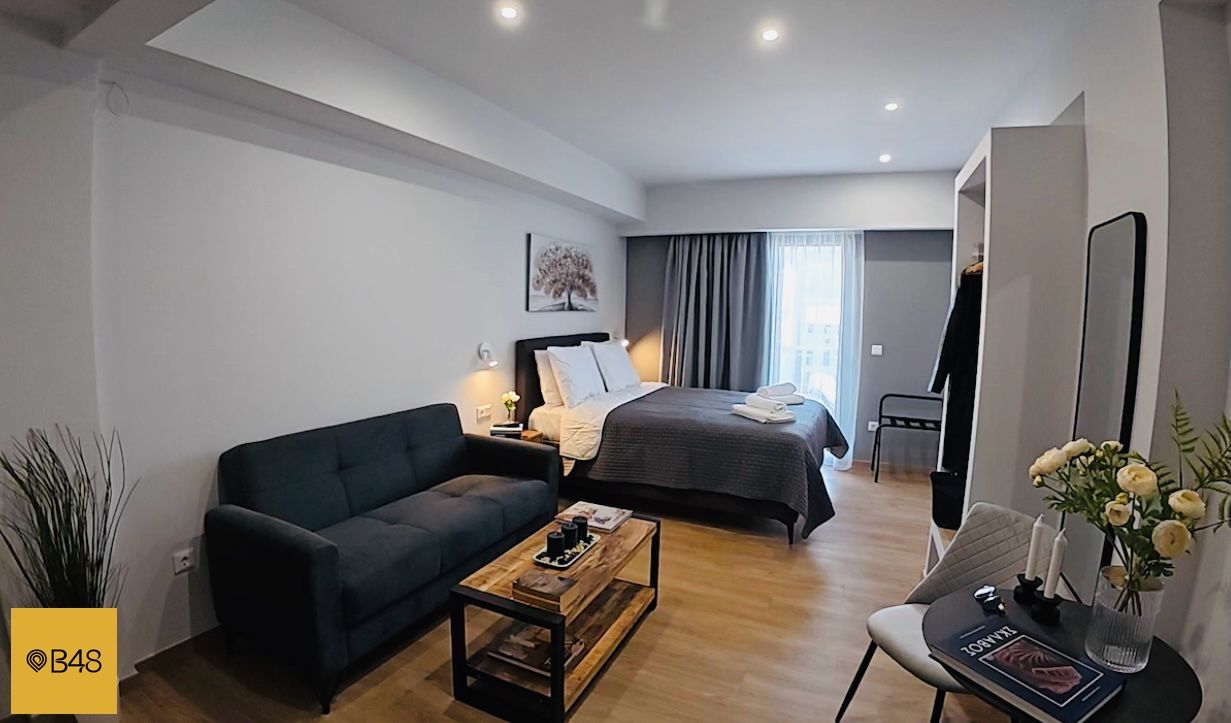
Nightly rates for fully-managed flats in Piraeus typically range from €60-€120, representing 15-25% savings compared to equivalent Athens city centre properties while maintaining similar amenities and service standards. This strategic coastal location—just 12 kilometres southwest of the city centre—has transformed Piraeus into a thriving hub for private stays catering to cruise travellers, maritime industry professionals, and extended-stay guests seeking coastal living combined with exceptional Athens connectivity.
Properties along Akti Miaouli waterfront promenade and the adjacent Pasalimani (Zea Marina) district position guests just 5-10 minutes walking distance from Gate E1-E12 ferry terminals, where high-speed catamarans and conventional ferries depart hourly for Mykonos (2.5-5 hours), Santorini (5-8 hours), Crete (7-9 hours), Rhodes (12-16 hours), and dozens of smaller Cycladic and Dodecanese islands.
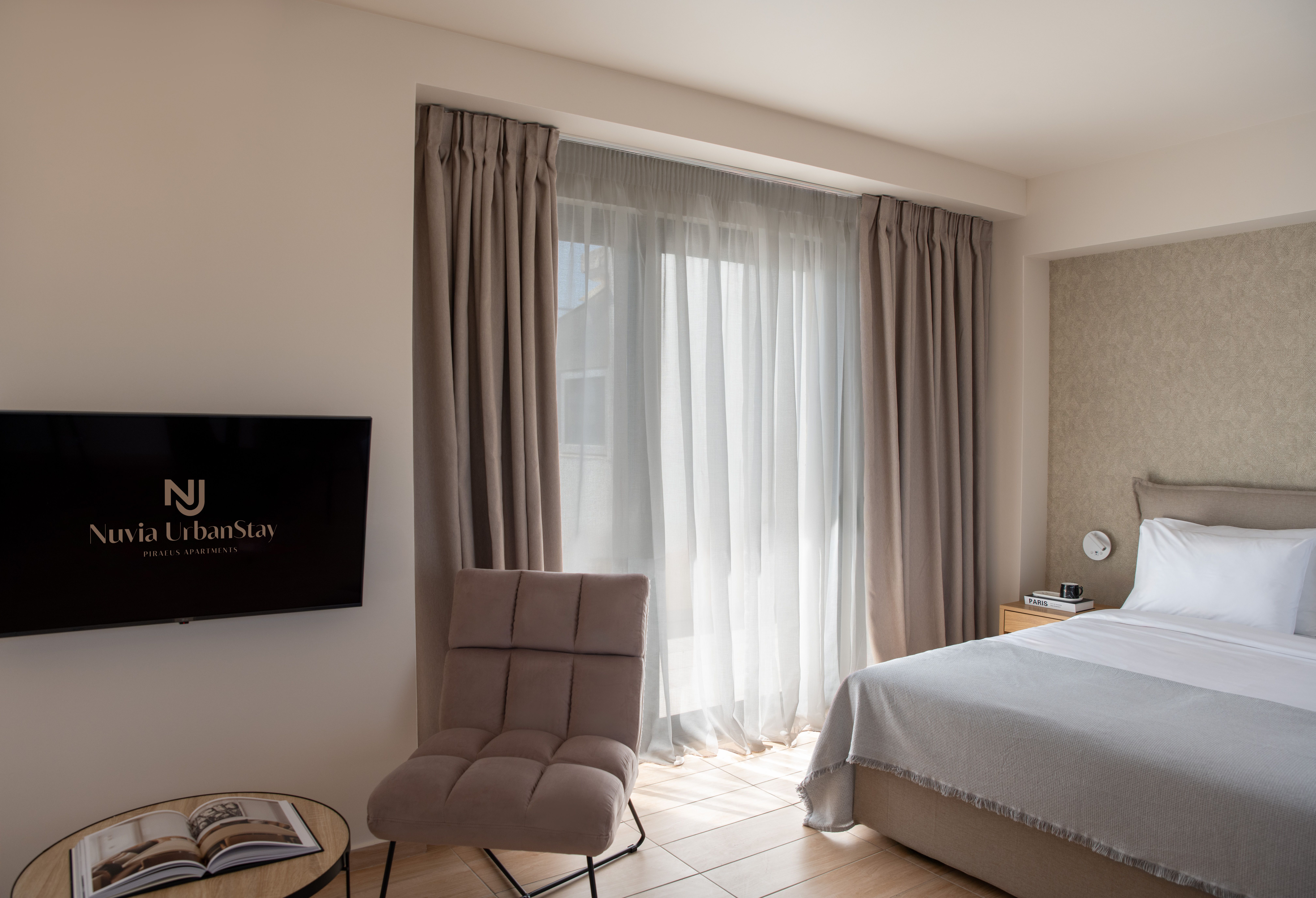
Managed stays in the Kastella neighbourhood—an elegant hillside district rising above Mikrolimano—attract senior executives on 1-6 month assignments. These premium furnished accommodations (typically 70-95 square meters) feature contemporary interiors, dedicated home offices with multiple monitors, high-speed fibre internet (200+ Mbps), and private balconies overlooking the Saronic Gulf.
The traditional commercial centre around Korai Square and Iroon Polytechniou Street provides mid-range autonomous accommodation options favoured by maritime surveyors, ship inspectors, and logistics coordinators requiring frequent port access.
 source: lavish-hospitality
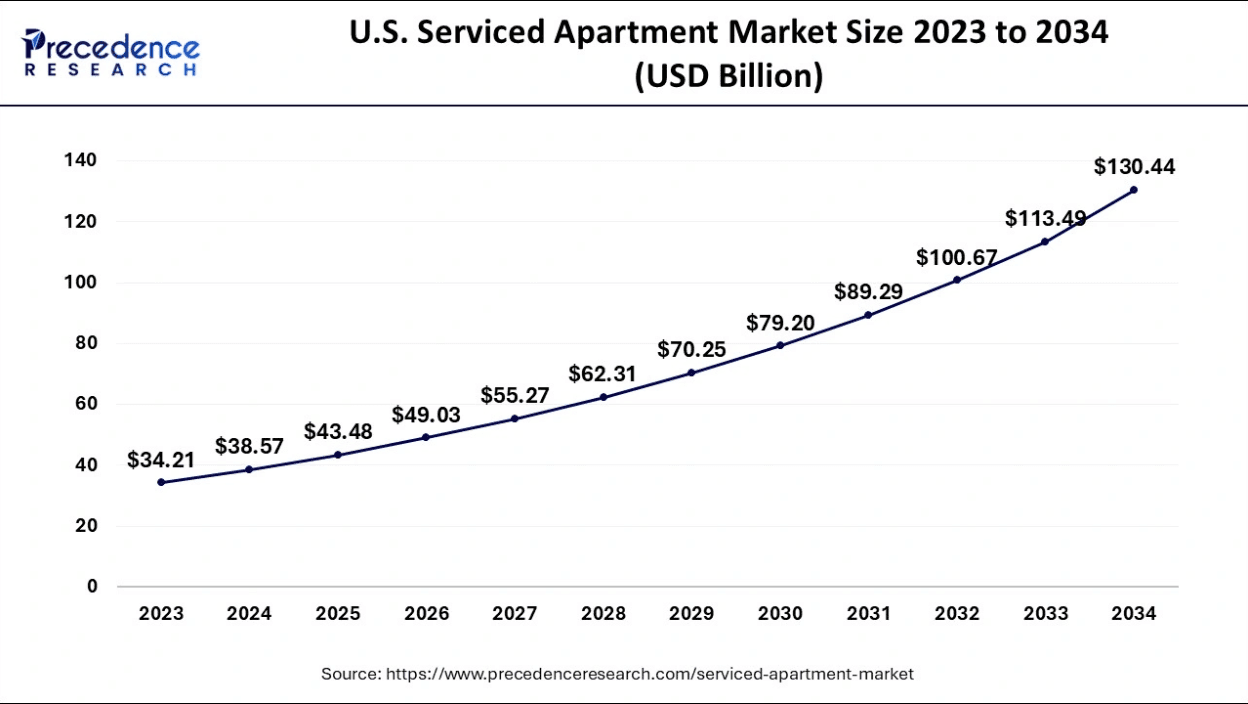
Serviced Apartment Market Size and Forecast 2024 to 2034
The global Managed property has entered a period of robust expansion, market size was calculated at USD 126.88 billion in 2024 and is predicted to reach around USD 420.89 billion by 2034, expanding at a healthy CAGR of 12.74% throughout this ten-year period.
This trajectory positions the apart hotel sector among the fastest-growing segments within the broader hospitality and residential real estate industries. The United Nations estimating that 68% of the world's population will reside in urban centres by 2050, compared to 55% in 2018.
This rural-to-urban migration—particularly pronounced in emerging economies across Asia-Pacific, Latin America, and Africa—creates sustained demand for flexible housing solutions that bridge the gap between traditional hotels and long-term residential leases.
Geographic market dynamics reveal significant regional variations in growth rates and maturity levels. European markets—led by the United Kingdom, Germany, France, and Spain—represent the most established serviced apartment sectors, with extensive inventory across primary and secondary cities.
Looking toward 2034, industry analysts anticipate sustained double-digit growth driven by structural shifts in work patterns, travel preferences, and urban living expectations.
 source: precedenceresearch
The Future of Serviced Accommodations in Greece
As this comprehensive overview demonstrates, furnished flats in the country—particularly across Athens' vibrant neighbourhoods like Kolonaki, Plaka, and Syntagma, and maritime-focused Piraeus districts—deliver a compelling value proposition that traditional hotels and conventional residential leases struggle to match.
The apart hotel sector has evolved from a niche accommodation category serving primarily business travellers into a mainstream hospitality solution addressing diverse needs across leisure tourism, corporate relocations, extended stays, and the emerging digital nomad economy.
The fundamental appeal lies in versatility and flexibility. Whether you're a family spending two weeks exploring the Acropolis and island-hopping from Piraeus port, a shipping executive managing a 6-month project near Zea Marina, a remote professional establishing Athens as your Mediterranean work base for an entire season, or a couple enjoying a long weekend city break in Monastiraki, these asset types provide the residential space and independence you need while maintaining hotel-quality services.
Looking ahead, several trends will shape the country's fully-managed apartment landscape through 2030 and beyond. Continued professionalisation through international brand entry (Marriott Executive Apartments, Wyndham properties), technology integration enabling seamless digital check-ins and smart home features, will elevate quality standards while protecting neighbourhoods from over tourism pressures.
FAQs
Who chooses managed properties for their stay?
Corporate professionals on long-term assignments in different cities.
Digital nomads working remotely from various locations.
Long-stay tourists and families, who prefer accommodations with home-like amenities.
Students, especially in cities with prominent educational institutions.
What is typically included in management costs?
Cleaning and maintenance services
Reception and security
Utility bills (e.g., electricity, water, internet)